Chinese Markets Shed $2.4 Trillion as AI Stocks Retreat
Beijing's 60 billion yuan AI fund began deploying capital this month, but tech shares have already lost value.
By Julia Morgan ·
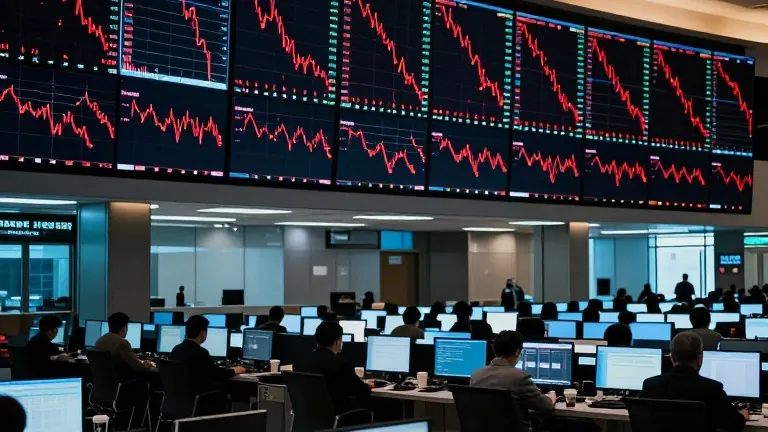
Trillions in value have drained from China's equity markets since May as investors reassess artificial intelligence companies competing with the United States.
The STAR 50 Index, which tracks technology and innovation firms listed in Shanghai, has fallen 40% since June. Broader indexes of major companies declined about 20% over the same period. The selloff has removed $2.4 trillion from Chinese stock market value since May, according to Bloomberg figures cited in reporting on the decline.
AI-related shares represent more than 40% of combined stock market value in China and Hong Kong, according to Goldman Sachs, so losses in that segment spread through the broader market. China's government has backed a 60 billion yuan state investment fund that began financing domestic AI developers this month. Chinese consumers have not matched that spending, leaving many technology firms unable to turn profits.
Dan Wang, the China director for the Eurasia Group, cited three pressures: profit margins below expectations, rising US rates, and weak domestic demand. She described a "general anxiety" among technology companies about whether state-backed investment can succeed without consumer purchasing.
The United States has barred humanoid robots from China on national security grounds and is considering limits on Chinese components in data centers. Beijing has concentrated on robotics to distribute AI across society and to address an aging population and a shrinking workforce. Government agencies and research institutions drive that demand; households find the products costly and impractical for home use. Unitree, China's largest robot maker, has seen its share price halve since trading began in August. Wang said embodied intelligence "doesn't look like" it could produce mass-market profits.
China has restricted overseas investment in recent months, with more regulations taking effect from 1 December, but those steps have not pulled capital into domestic markets. Anthropic, the US maker of the Claude chatbot, filed paperwork on Monday for a planned IPO that could raise as much as $100bn. Chinese Communist Party officials convened this week for the fifth plenum ahead of next year's 21st Party Congress, which is expected to grant Xi Jinping a fourth term. Wang said any stimulus measure would be "high risk": "What if it doesn't work out? Then whoever came up with that policy, that guy would be held accountable".
Wang said optimism persists in AI research and satellites, where military links suggest long-term state support. The global AI boom is expected to continue for at least another year.
Source: The Guardian